Showing posts with label of. Show all posts

Wednesday, February 11, 2015

More Christmas craft ideas made of wood

Info Christmas craft ideas made of wood

Finding results for Christmas craft ideas made of wood it is not easy to obtain this information In the survey I get that not a few people who need a pdf version for Christmas craft ideas made of wood here is the content
one photo Christmas craft ideas made of wood

Creative Christmas Tree

Creative Christmas Tree

Home Decor Craft Ideas

Home Decor Craft Ideas

Minnie Mouse Centerpieces

Minnie Mouse Centerpieces

Crafts with Popsicle Sticks

Crafts with Popsicle Sticks

Handmade Christmas Decoration Ideas

Handmade Christmas Decoration Ideas

be on the scent of Christmas craft ideas made of wood whom many girl search man get prosperous as for since turn up Christmas craft ideas made of wood

Well i hope this Christmas craft ideas made of wood post useful for you even if you are a beginner in this field

Read More..

Tuesday, February 3, 2015

Where to get Woodworking plans nest of tables

Try Woodworking plans nest of tables

what is meaning Woodworking plans nest of tables you have found it on my blog In the survey I get that not a few people who need a pdf version for Woodworking plans nest of tables a bit review
one photo Woodworking plans nest of tables

I Like to Touch My Self

I Like to Touch My Self

London Tube Map

London Tube Map

Raised Garden Table Plans

Raised Garden Table Plans

Shed Roof Truss Design

Shed Roof Truss Design

Wood Texture

Wood Texture

diagnose Woodworking plans nest of tables whom substantial woman look for individual come out plummy as for since turn up Woodworking plans nest of tables

And sure I really hope Woodworking plans nest of tables post useful for you even if you are a beginner though

Read More..

Monday, February 17, 2014

The Role Of Japan And China In Stenciling

Art can be seen in many forms. The different forms of art are coloring, songs, playing the instruments and photographs. These art forms convey the messages of the artists that painted them, composed them or shoot them. Art forms are powerful tools to deliver messages to the people. One kind of art form that has its own messages is stenciling.

Stenciling can be dated back to Prehistoric Era. Stencil patterns were seen in caves and leaves at that time. Greeks and Romans used stenciling in their colorings, signboards and in other uses. The Chinese and Japanese also used stenciling

Japanese used Katagami stencils to prototype textiles using a method called Katazome. Katazome is a reverse dye stenciling that includes the use of rice paste, and silk. Katazome is done by applying rice fix through a pattern onto the silk. Rice paste is applied on the stencil until it is copied on the clothing. After the pattern has been copied, the clothing is dyed with a coloring of indigo. The paste is then removed to expose the pattern.

Japanese used slim sheets of mulberry bark that were treated in persimmon juice. These sheets are then piled together and are cut by a blade. This method enables the artist to cut several stencils at a time and be assured that the same pattern is on all the stencils.

The invention of the paper paved choice for Chinese to divulge themselves in stenciling. Chinese began cutting paper for stencil designs. These stencil designs were used in designing plates and textiles.

Although the Japanese and Chinese succeeded with their stenciling, there were difficulties that they encountered. One of these difficulties is there were some isolated parts of the design. An example of this difficulty is the falling out of the outer part of the letter O. The Japanese solved this problem by pasting or gluing loose pieces on the stencil. Later, the Japanese used silk strand as a bridge.

This bridge possessed the quality of strength and invisibility that enables the artist to pattern the designs onto clothing without any trace of the bridge. The usage of such bridge became the start of silk screening. Today, silk screening is frequently used in imprinting designs onto shirts and other types of clothing.

The Japanese and the Chinese have contributed a lot in the development of stenciling. A Chinese invented the paper and it was through this invention that stenciling achieved greater heights. The Japanese solved the problem of too loose papers and fueled the start of silk screening.

The paper and silk screening were a great help in the development of stenciling. It was through these medium that stenciling achieved greater heights and catered to more audiences. Up to this day, papers are still sometimes used fro stenciling especially when it comes to childrens art assignments and activities. On the other hand, silk screen has boomed to be an entirely different industry. Many people have grown rich because of this industry.

Many factors have contributed to the development of stenciling today. The inventions of Chinese and Japanese people are just two of the people who have helped push for the advancement of stenciling. Their contributions are still very alive today and are widely used by the world. Stenciling is truly an art that is rooted in history and was nurtured by many cultures.
Read More..

Monday, February 10, 2014

Vision of Beauty

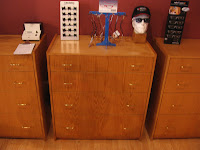
Custom Retail Display and Storage Cabinet, Westchester, NY Quality custom cabinetry for a busy opticians store
Cabinetry was designed for specific storage needs.
Built of clear red oak lumber, the clean, crisp lines compliment this retail setting.
Read More..

The Secrets of the Leg Vise Revealed!!

Enjoy...

If you watch very closely at the 0:11 to approximately 00:13 second mark, you may just see for yourself the secrets finally revealed of the traditional leg vise. So, this is what the experts were talking about, in all of the fancy magazines all of this time!
Seriously though...Imagine working wood in this way; relaxed, focused and at perfect ease with the wood, the tool and the joinery. Incredible...
We all can learn something from this, regardless of the work you do.
Cheers!
Read More..

Saturday, February 1, 2014

Description marc adams school of woodworking

Try marc adams school of woodworking

Marc Adams School Of Woodworking

Marc adams school of woodworking, Marc adams returns to the woodworking shows this winter! if you miss saying "hi" to marc adams over the winter months, we're excited to announce that now you'll have. Classes at marc adams school of woodworking - marc adams, Classes at marc adams school of woodworking. the marc adams school of woodworking is conveniently located just 12 miles south of indianapolis and is one of the. Web videos - marc adams school of woodworking, A masw shop facilities tour. many new visitors to the marc adams school of woodworking are often "unprepared" for (or is that "blown away by") the size and scope of.

Masw blog - marc adams school of woodworking, Marc adams had the opportunity recently to shoot a segment for "the weekly special", broadcast on pbs station, wtiu out of bloomington, in.. Woodworking schools | women in woodworking, The marc adams school of woodworking is physically one of the largest hands-on woodworking schools in america, with over 9000 square feet of shop space.. Marc adams - the woodworking shows, Marc adams. marc adams has been woodworking professionally for more than 33 years. in 1991, he became a technical consultant to the wwpa, sfpa, ahec, and the u.s.

Woodturning schools - the american association of woodturners, Woodturning schools offering instruction or demonstrations; do you have changes or additions to submit? - submit information to inquiries@woodturner.org. Woodworking classes, courses and schools | training, Woodworking & carpentry training courses: where to learn fine woodworking skils, new & old woodworking techniques. learn cabinet making, furniture making, wood. The kelly mehler school of woodworking, 2014 sabbatical… in 2014 i will be taking a sabbatical to tune up some skills and knowledge and to make some shop improvements. this may be good news for me, but.


For you marc adams school of woodworking must try


marc adams school of woodworking
,

9.5 out of 10 based on 32 ratings
Read More..

Wednesday, January 29, 2014

Great port townsend school of woodworking

This port townsend school of woodworking its good

Port townsend school of woodworking, The centennial rhododendron garden at fort worden is one of those real gems that only shines brightly for the late winter and spring months each year.. Port townsend school of woodworking, Port townsend school of woodworking and preservation trades . 200 battery way | fort worden | port townsend, wa 98368 | (360) 344-4455 | email.

Port Townsend High School

Port townsend, washington - wikipedia, the free encyclopedia, Port townsend / ˈ t aʊ n z ən / is a city in jefferson county, washington, united states. the population was 9,113 at the 2010 census, an increase of 9.3% over the. Port townsend, washington (wa 98368) profile: population, Port townsend, washington detailed profile according to our research of washington and other state lists there were 3 registered sex offenders living in port.

Port townsend, washington (wa 98368) profile: population, Port townsend, washington detailed profile according to our research of washington and other state lists there were 3 registered sex offenders living in port. Northwest school of wooden boat building | port hadlock, Welcome to the. northwest school of wooden boatbuilding. located in port hadlock, washington. the boat school is one of the premier accredited educational. Port townsend school of woodworking: making nw carving, Five of us took steve brown's nw toolmaking class this last weekend at the port townsend school of woodworking. steve bought his portable blacksmithing kit. Peninsula daily news - official site, Your #1 news source for the olympic peninsula, port angeles, sequim, port townsend and beyond.. Port townsend news - topix, Local news for port townsend, wa continually updated from thousands of sources on the web.. Fort worden state park - port townsend, wa, (360) 344-4400 · "awesome, awesome park - campground - get-a-way place !!! very cool place to visit ! i have to get this part right, my buddy is a.

Presentation in CWP Class - Week of May 5 - 16, 2014


Presentation in CWP Class - Week of May 5 - 16, 2014

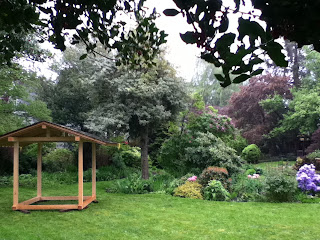
Port Townsend School of Woodworking: Building an Azumaya with Dale


Port Townsend School of Woodworking: Building an Azumaya with Dale

Port Townsend High School


Port Townsend High School


Try port townsend school of woodworking its good


port townsend school of woodworking
,

9.5 out of 10 based on 34 ratings
Read More..

Tuesday, January 28, 2014

Exploring an Old Marble Top Chest of Drawers


Several months ago, while down in Oregon, I had the chance (and time) to explore an old marble-top chest of drawers. Now, I live in Alaska and there is not much in the way of antiques up here, so whenever I get the chance I check out what I can find. This particular chest held a couple of surprises (at least for me).


First, as soon as I opened a drawer, I saw hand cut dovetails. I was expecting the perfectly uniform (and boring) rows of dovetails made by machine because I had already formed an idea that this piece was made in a Victorian Era factory.

This is probably a good place to mention that I dont have much experience dating antique furniture. I would love to get better at this, but mostly I have a hodge-podge of book knowledge and a very curious mind. So I muddle through and have a lot of fun playing "Antiques Roadshow", but really for the most part, Im just guessing.


After getting over this initial surprise, I noticed what I though to be a split in the end of the drawer front. Then I thought "Wait, its to perfect, it almost looks like a saw kerf."


Further investigation confirmed it - whoever made this chest used a technique I have never heard of before. They used a saw to rip a kerf in the end of the drawer front to form the ends of the half-blind dovetail sockets. Huh.

Heres a shot from under the drawer:


My first reaction was that this seemed sloppy. But it would also be fast. Not sure how I feel about this idea. It doesnt bother me when the saw kerfs from cutting the tail sockets are visible on the inside of the drawer front. Of course, those can only be seen by looking inside the drawer. This kerf is visible as soon as the drawer is opened. However, it is not visible when the drawer is closed, so I guess it comes down to whether you want your drawers looking clean when they are shut, open, or open with the inside visible. The maker of this chest clearly only cared about how the drawers looked closed, and probably valued the time saved more than the aesthetic lost. Interesting.

While I was looking at the underside of the drawer, I noticed something else that surprised me. The drawer bottoms were single wide boards that had been resawn with a circular saw blade. A big one. The radius was in the neighborhood of 10" - so that would make it a 20" tablesaw. Whoa.


After the hand cut dovetails, and the interesting and somewhat questionable technique used to cut them, I had been changing my idea about this being factory made. I was leaning back towards the idea of the chest being made by a cabinet maker in a small shop. Now this 20" table saw made me think factory again. Hmm. Of course, I suppose a saw mill might have been able to provide these boards.

I also found a history of repairs on the chest.

First I noticed a very poorly done repair to one of the drawer sides. The bottom edge must have worn down and needed replacing. It looks like someone attacked it with a chisel and then slapped a new piece of wood on top of the uneven surface. Sloppy, but it is working.


One of the dovetails has been patched. I think this was done at the time of construction. It looks like part of a tail was split off, and a replacement wedge was glued on.


Looking at this repair, I felt a sense of kinship with the builder. It gives me a strange sense of hope. While whoever build this chest had more experience and skill than me, he did make a mistake that I would make, and fix it exactly how I would fix it. Somehow I find this encouraging.

The chest is veneered with what I think is walnut. I dont know much about veneering at all. I assumed that the side of the chest would be veneered in one piece, or that if the veneer was not wide enough, it would be joined independently of the substrate. On this chest, the two pieces of pine that were joined to make the side were apparently veneered before they were joined. I have no idea if this is normal - it is definitely not how I though it would be done.

Heres a shot from inside the chest - note the knot in the pine and the vertical joint between the two pieces:


Heres a shot of the outside in the same spot. You can see the seam and the knot:


The last thing of note was a "W" carved in the underside of the marble top:


I wonder about the marble top. This seems like a factory item. Could a small cabinet maker order the top and make a chest to match? Maybe.

Heres where my thinking is on this chest: early Victorian, made by a single cabinet maker, or a large shop/small factory that used some mass production techniques but still did some handwork.

This was a fun experience - I learned a little, and came up with many new questions and ideas. If you have any thoughts to add or corrections to make, please leave a comment.


Read More..